
Active Warrants in Lorain County
Warrants in Lorain County are issued by judges and magistrates in the courts that handle each case. A felony warrant ties to a Court of Common Pleas case. A traffic or misdemeanor warrant ties to one of the county's municipal courts. The sheriff and city police agencies then serve those warrants. So the court orders the warrant, and law enforcement carries it out.
Here is the part that surprises many people. No official standalone Lorain County active-warrant portal was found. The county does not post one master list of open warrants. Warrant information instead surfaces through several official channels. The Common Pleas docket can show warrant, capias, and bench-warrant events in felony and civil contempt cases. Municipal court public-access systems can show traffic and criminal warrants or failure-to-appear events. The Sheriff's Inmate Inquiry shows the prisoner type "Warrant" and the charge class "Bench Warrant" in public booking records. And the Sheriff's Records Division can confirm booking, bond, and warrant details by phone or in person. Update timing varies by system, so a warrant may take time to appear or clear across these tools.
Types of Warrants in Lorain County
Not all warrants mean the same thing. The reason a warrant was issued shapes how it is resolved and whether bond applies. Lorain County records reflect a few common types, and a search warrant works very differently from the rest. The list below sorts them out.
- Arrest warrant - issued to arrest a person charged with an offense.
- Bench warrant / capias - issued by a judge after a missed court date, contempt, a probation violation, or failure to comply.
- Search warrant - authorizes a search and seizure under Ohio Criminal Rule 41; active pre-execution search warrants are usually not public.
- Civil warrant / body attachment - can arise from contempt, support, or other court orders.
- Probation / parole holder - a custody hold from Adult Probation, Adult Parole, or another supervising agency.
A search warrant under Ohio Revised Code § 2935.10 and Criminal Rule 41 is kept private before it is carried out. Disclosing it early could harm an investigation or risk safety. The other warrant types are more likely to surface in public court and jail data.
How to Search Lorain County Warrants
Because there is no one warrant database, a search means checking the right system for the case. Start with the court that would hold the matter, then check the jail data, then call the Records Division to confirm. The steps below cover the practical path.
- Search the Clerk of Courts eServices docket for felony or civil contempt cases that may list a capias or bench-warrant entry.
- Check the right municipal court's public-access system for traffic or misdemeanor warrants and failure-to-appear events.
- Open the Sheriff's Inmate Inquiry and look for a "Warrant" prisoner type in a booking record.
- Call the Sheriff's Records Division to verify a warrant, bond, or booking detail.
The Records Division can confirm what an online system may not show clearly. Its page, below, explains how the office handles inmate information and record requests.
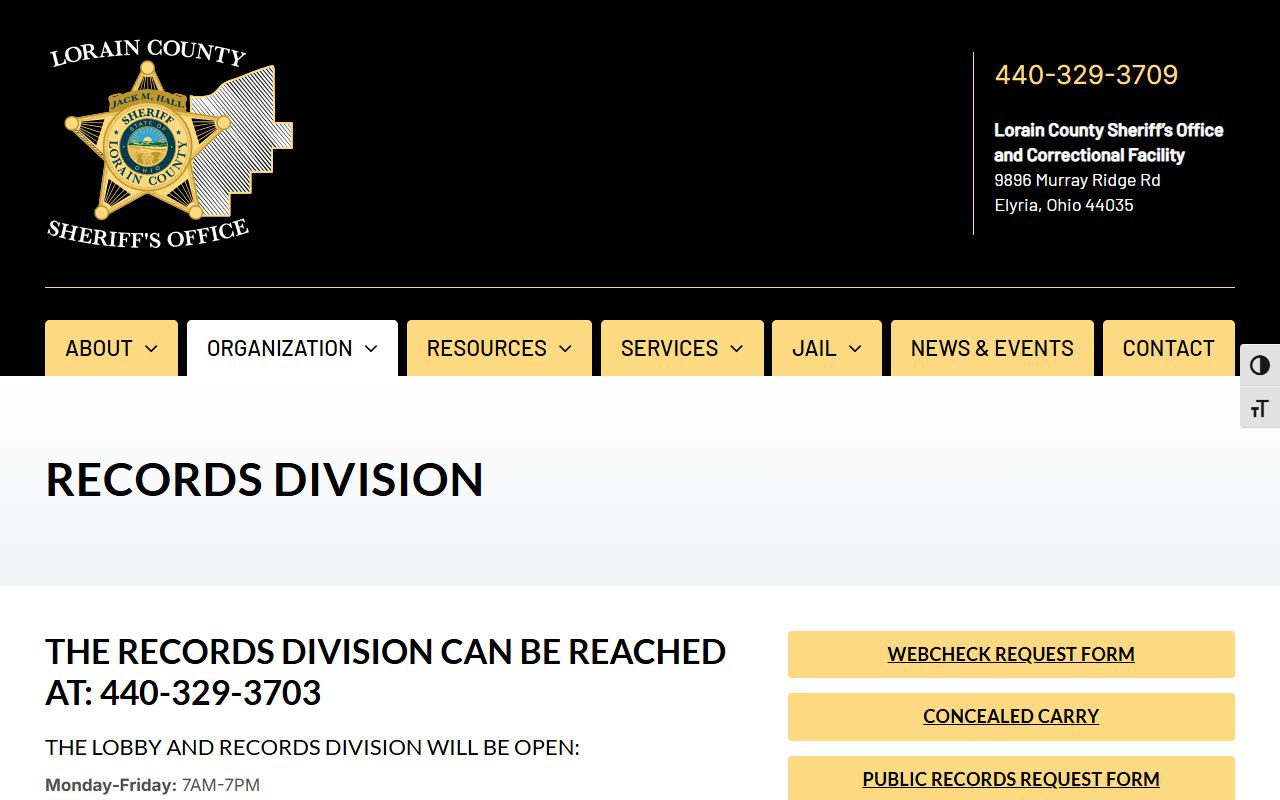
You can reach the office through the Sheriff Records Division page. For full roster and booking detail, the inmate records page goes deeper into the same system.
Lorain County Warrant Search Fields
Since the county has no dedicated warrant form, the practical search runs through the Sheriff's Inmate Inquiry. Its fields double as the warrant-search fields, because a served or held warrant shows up as a booking with a "Warrant" prisoner type. The table lists what you can enter.
| Field Label | Type | Required | Notes |
|---|---|---|---|
| Name | Text | No | Full or partial name; try spelling variants. |
| Subject Number | Text | No | Tyler subject number if known. |
| Booking Number | Text | No | Jail booking number if known. |
| In Custody | Checkbox | No | Filter for current custody status. |
| Booking From / To Date | Date | No | Narrow by booking date range. |
| Housing Facility | Dropdown | No | Facility selector. |
No login is needed. A warrant that has not yet led to a booking may not appear here at all, which is why a call to the court or Records Division still matters.
What a Lorain County Warrant Record Shows
When a warrant shows up in the jail data, it carries a set of fields drawn from the inmate profile. These come straight from a sample booking record tied to a warrant. The inventory below lists what a warrant-related record can include.
| Field | What It Shows |
|---|---|
| Prisoner Type | Marked "Warrant" for a warrant-based booking. |
| Charge Description | The reason, such as "Acts in contempt of court." |
| Docket Number | The case number, for example 25CR113164 or 23CR108137. |
| Crime Class | Classification such as "Bench Warrant." |
| Disposition | Status such as Personal or Bond Posted. |
| Bond Number / Type / Amount | Bond table, shown even where the amount is $0. |
| Court Date / Court / Court Room | The scheduled court date and location. |
| Booking Origin | The arresting or supervising agency. |
The docket number is the link back to the full case. Take it to the Clerk eServices portal or the right municipal court to read the underlying file. For the charges behind a warrant, the criminal records page explains arrest and booking data in more depth.
How to Resolve an Outstanding Warrant
An open warrant does not fix itself. It can lead to an arrest at a traffic stop or a routine contact. The safest path is to verify it, learn the terms, and deal with the issuing court in an orderly way. The steps below follow the official guidance.
- Verify the warrant through official court or sheriff channels. Use the case docket, a municipal court search, or a call to the clerk or Records Division.
- Identify the issuing court, the case number, the charge or reason, and any bond conditions.
- Contact a lawyer, or ask about the public defender and appointed-counsel process, if there is criminal exposure.
- Ask the issuing court clerk whether a warrant-block or removal hearing can be set, whether bond is set, and whether payment alone clears it.
- If surrender is required, use the sheriff's official location and instructions. Persons reporting for jail time enter the lobby, notify staff or use the lobby phone, and are subject to a search and body scan.
- After it is resolved, confirm the docket update and keep any bond or payment receipt. Statewide databases do not clear instantly.
A scam has targeted Lorain County residents around this exact fear. The Sheriff's Office warned of callers who spoof official numbers and tell a fake story about a magistrate, a subpoena, or an unpaid warrant. They demand quick payment. The warning, below, lays out the scheme.
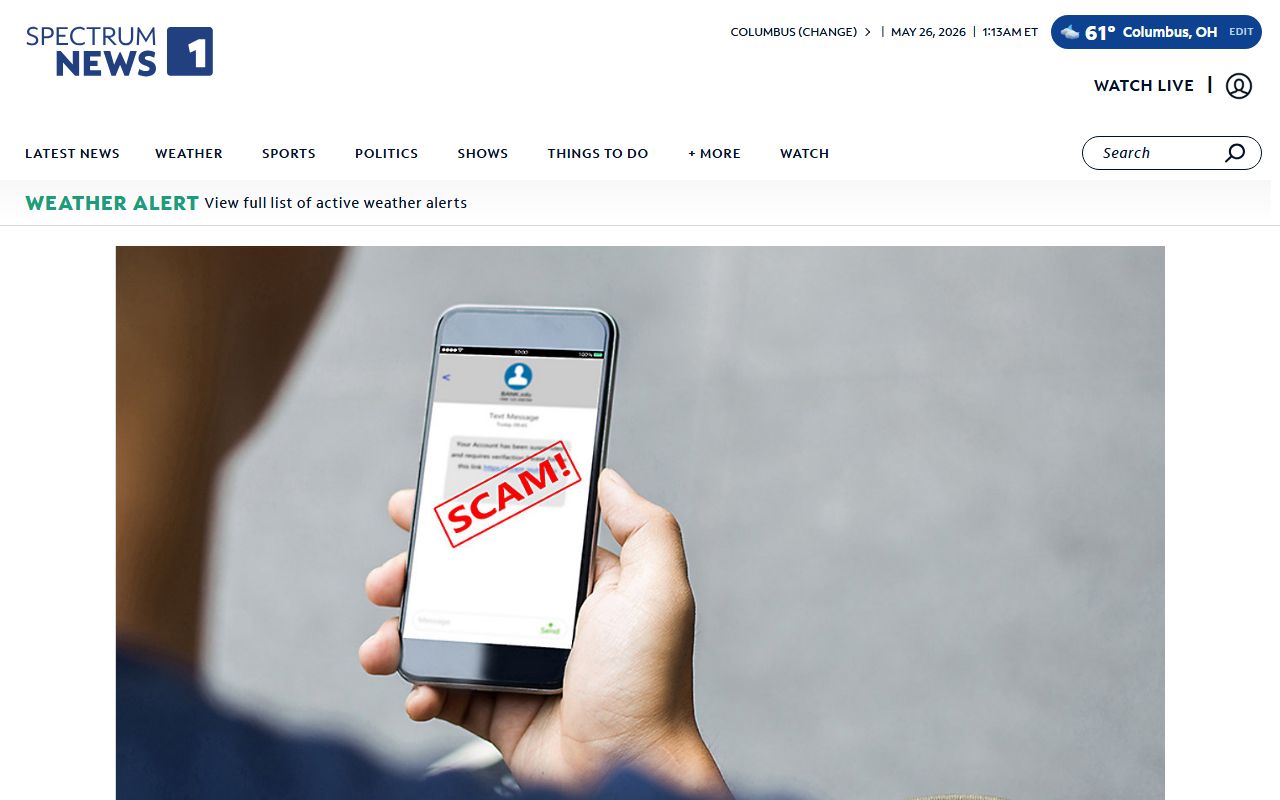
You can read the full scam warning notice for the details the office shared.
Important: Never pay a caller who claims you owe money on a warrant. Hang up and verify any warrant directly through the court or the Sheriff's Records Division.
Bond and Self-Booking on a Warrant
Many warrants carry a bond. A warrant record in the jail data lists a bond number, a bond type, and a bond amount, even when that amount is set at $0. Bond type can show as Cash, Surety, or None. The bond is the security a court sets for release, and the court that issued the warrant controls those terms. So the first question after verifying a warrant is simple. Is bond set, and how much?
If surrender is the path, the sheriff runs a self-booking process. A person reporting for jail time enters the lobby and notifies staff or uses the lobby phone. Everyone reporting is subject to a search and a body scan. Approved currency is secured in a kiosk and placed on an inmate account. Do not assume a phone payment or an online step alone clears a warrant. The court must act, and the docket should reflect it afterward.
Restricted Lorain County Warrant Records
Some warrants stay out of public view by design. An active search warrant is the clearest case. Under Criminal Rule 41, it is usually sealed before it is carried out, because early disclosure could tip off a target or risk safety. Juvenile warrants fall under juvenile law, which limits public access. Federal warrants are handled by federal agencies and courts, not the county system.
Sealed and expunged cases also drop their warrant history from public access once a court grants the order. So a search that comes up empty does not always mean no warrant ever existed. When in doubt, the issuing court or the Records Division can tell you what the public systems cannot. For someone already booked, the inmate records page shows current custody.